Portable Air Conditioner Size Calculator: Find Your Perfect BTU
Choose the right portable air conditioner for your space. Enter your room details below to get an accurate BTU recommendation tailored for portable AC units, including considerations for venting, heat output, and room conditions.
List of the Top 10 Best Portable AC:


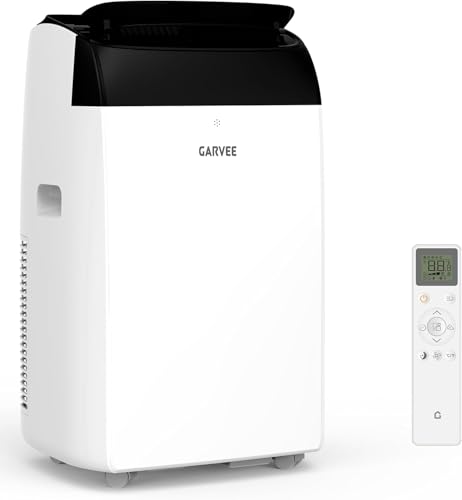


Portable Air Conditioner Sizing Guide
Portable air conditioners offer flexibility and convenience, but proper sizing is crucial for effective cooling. Unlike window units, portable ACs have unique considerations such as venting efficiency, heat output from the unit itself, and the impact of hose configuration on overall performance.
Key Factors for Portable AC Sizing
Our portable AC calculator adjusts for factors that are especially important for portable units:
| Factor | Description | Impact on Portable AC Sizing |
|---|---|---|
| Room Dimensions | Length, width, and ceiling height | Determines the volume of air to cool |
| Venting Setup | Single vs. Dual hose system | Dual hose units are more efficient and may require slightly lower BTU for the same room |
| Sunlight & Occupancy | Heat gain from sun and people | Increases cooling load, requiring higher BTU |
| Climate Zone | Outdoor temperature | Hotter climates need more cooling capacity |
Portable AC BTU Recommendations
General guidelines for portable AC units (based on standard 8-9 ft ceilings):
| Room Area (sq ft) | Recommended BTU (Single Hose) | Recommended BTU (Dual Hose) | Common Room Size |
|---|---|---|---|
| 100 – 150 | 6,000 – 7,000 | 5,500 – 6,500 | Small bedroom, office |
| 150 – 250 | 7,000 – 9,000 | 6,500 – 8,000 | Medium bedroom, living room |
| 250 – 350 | 9,000 – 11,000 | 8,000 – 10,000 | Large living room, master bedroom |
| 350 – 450 | 11,000 – 13,000 | 10,000 – 12,000 | Open concept, small apartment |
| 450 – 550 | 13,000 – 15,000 | 12,000 – 14,000 | Large apartment, basement |
| 550 – 700 | 15,000 – 18,000 | 14,000 – 16,000 | Great room, studio |
Portable AC Efficiency Tips
- Dual Hose vs. Single Hose: Dual hose units are generally more efficient because they don't create negative pressure in the room.
- Venting: Ensure the exhaust hose is as short and straight as possible for optimal performance.
- Window Seal: Use a proper window seal kit to prevent warm air from entering around the vent.
- Condensation Management: Some units self-evaporate; others may require manual draining. Choose based on your humidity levels.
- Energy Efficiency: Look for units with a higher EER (Energy Efficiency Ratio) to save on electricity costs.
Frequently Asked Questions
Can I use a portable AC in any room?
Yes, portable ACs are versatile and can be moved between rooms. However, you'll need access to a window for venting the hot exhaust air. The unit should also be on a level surface and have adequate clearance around it for proper airflow.
Why is dual hose better than single hose?
Dual hose units use one hose for intake and one for exhaust, which prevents the unit from drawing in warm air from other parts of the house. This makes them more efficient and effective, especially in warmer climates.
How much do portable ACs cost to run?
The operating cost depends on the unit's wattage, local electricity rates, and usage hours. A typical 10,000 BTU portable AC uses about 1,000-1,200 watts. Use the Energy Star label to find the most efficient models.
Do portable ACs need to be drained?
Many modern portable ACs are self-evaporating, meaning they recycle condensation to cool the unit and exhaust it outside. However, in high humidity conditions, you may need to manually drain the unit periodically.
Can I use a portable AC without a window?
While a window is the most common venting option, you can also vent through a sliding door, a wall, or even a drop ceiling. Some units can be vented through a dryer vent or other existing openings.
What's the noise level of portable ACs?
Portable ACs are generally louder than window units because the compressor is inside the room. Check the decibel rating; most range from 50-60 dB, similar to a normal conversation or background music.
Can I use a portable AC in a garage or workshop?
Yes, but you may need a higher BTU capacity due to typically higher heat loads and less insulation. Ensure the unit is rated for the space and consider a heavy-duty model designed for such environments.
How do I maintain my portable AC?
Clean the air filter every 2-4 weeks, check the exhaust hose for kinks, ensure the window seal is tight, and occasionally clean the condenser coils. Regular maintenance ensures efficient operation and extends the unit's lifespan.
Installation Best Practices for Portable ACs
- Position the unit near a window for the shortest hose run.
- Keep the exhaust hose as straight as possible to reduce backpressure.
- Use foam insulation or a proper window kit to seal the opening.
- Place the unit on a flat, stable surface to prevent vibration.
- Ensure at least 2 feet of clearance around the unit for airflow.