HVAC Ductwork Calculator: CFM, Duct Size & Static Pressure
Design efficient duct systems with our HVAC ductwork calculator. Enter airflow, duct length, and fitting details to get recommended duct dimensions, friction loss, and total static pressure for your residential or light commercial project.
List of the Best HVAC Duct:
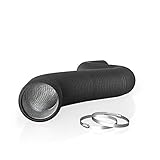

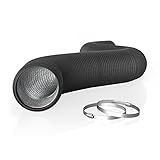


HVAC Ductwork Sizing & Static Pressure Guide
Proper ductwork design is essential for system efficiency, comfort, and equipment longevity. Undersized ducts cause high static pressure, noise, and increased energy consumption, while oversized ducts waste material and space. This calculator helps you find the sweet spot for your HVAC system.
Key Parameters for Duct Design
Our calculator uses fundamental HVAC engineering principles to provide reliable sizing recommendations:
| Parameter | Description | Impact |
|---|---|---|
| CFM (Airflow) | Required airflow in cubic feet per minute | Determines duct cross‑section and velocity |
| Friction Loss | Pressure drop per 100 ft of duct | Affects blower performance and static pressure |
| Equivalent Length | Duct length + fittings resistance | Adds to total pressure drop |
| Static Pressure | Total resistance the blower must overcome | Must be within equipment specifications |
| Velocity | Air speed in duct (fpm) | Noise and erosion control (ideal 700‑900 fpm for residential) |
Recommended Duct Sizes (Round) for Common CFM
| CFM | Round Diameter (in) | Velocity (fpm) | Friction Loss (in/100ft) |
|---|---|---|---|
| 400 | 8 | 1,145 | 0.12 |
| 600 | 10 | 1,100 | 0.11 |
| 800 | 12 | 1,020 | 0.09 |
| 1,000 | 14 | 935 | 0.08 |
| 1,200 | 16 | 860 | 0.07 |
| 1,600 | 18 | 905 | 0.08 |
| 2,000 | 20 | 917 | 0.07 |
Equivalent Length for Fittings
- 90° Elbow: adds 15‑25 ft equivalent length (depending on radius)
- 45° Elbow: adds 8‑12 ft
- Tee (branch): adds 30‑50 ft
- Transition / reducer: adds 10‑20 ft
- Flexible duct: add 20‑40% more friction than smooth metal
Static Pressure & Blower Selection
Total static pressure (ESP) is the sum of duct friction loss, fitting losses, coil pressure drop, filter drop, and grille losses. Most residential blowers are rated for 0.5‑0.8 in. w.c. external static pressure. If your calculated static pressure exceeds 0.8 in. w.c., consider:
- Increasing duct size to reduce velocity
- Using smoother duct material (metal vs. flex)
- Reducing number of fittings or using long‑radius elbows
- Checking for undersized return ducts
Frequently Asked Questions
What is the ideal duct velocity?
For residential systems, 700‑900 fpm is recommended to balance noise and pressure drop. Higher velocities (above 1,000 fpm) can cause audible noise and increased static pressure, while lower velocities may result in larger, more expensive ducts.
How do I determine my required CFM?
CFM is typically based on the heating/cooling load (BTU/h) and desired temperature difference. A rule of thumb is 400 CFM per ton of cooling (12,000 BTU). For exact numbers, perform a Manual J load calculation.
What is the difference between round and rectangular ducts?
Round ducts have lower friction loss for the same cross‑sectional area and are easier to seal. Rectangular ducts fit better in wall cavities and are often used when space is limited, but they have higher friction due to increased perimeter.
How does duct material affect sizing?
Galvanized steel has a smooth interior with low friction. Flexible duct has a corrugated interior that increases friction by 20‑40%, requiring larger sizes for the same CFM.
What is equivalent length?
Equivalent length converts the pressure drop of fittings and components into an additional length of straight duct. It's used to calculate total friction loss in the duct system.
Can I use this calculator for commercial HVAC?
This tool is designed for residential and light commercial systems (up to ~5,000 CFM). For large commercial systems, consult ASHRAE handbooks and use specialized duct design software.
How often should ductwork be cleaned?
Duct cleaning is recommended every 3‑5 years, or if you notice mold, excessive dust, or a decline in system performance. Regular filter changes (every 1‑3 months) are more important for system health.
What is the maximum recommended static pressure for residential systems?
Most residential air handlers are designed for 0.5‑0.8 in. w.c. external static pressure. Exceeding this can reduce airflow, increase noise, and shorten blower motor life.
Duct Design Best Practices
- Size ducts based on the highest pressure drop run (critical path).
- Keep duct runs as straight and short as possible.
- Use 45° branch entries instead of 90° tees where possible.
- Ensure adequate return air capacity – often overlooked.
- Seal all joints with mastic or foil tape (not duct tape).
- Insulate ducts in unconditioned spaces to prevent condensation and energy loss.