HP to BTU Converter: Convert Horsepower to BTU/hr
Convert horsepower (HP) to British Thermal Units per hour (BTU/hr) instantly. Enter an HP value below to see the equivalent thermal power in BTU/hr, along with a detailed conversion breakdown and practical context for engines, boilers, compressors, and HVAC systems.
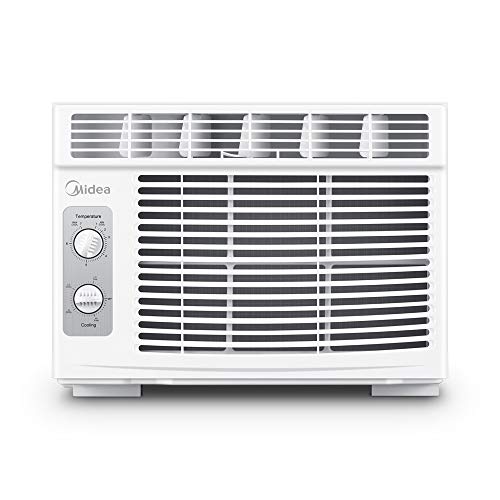
List of the Top 10 Best AC:


HP to BTU Conversion Guide: Everything You Need to Know
Converting horsepower (HP) to BTU per hour (BTU/hr) is a common task when working with engines, motors, boilers, compressors, and HVAC equipment. Both units measure power, but they come from different engineering traditions—horsepower from mechanical engineering and BTU/hr from thermodynamics and heating. Understanding how to convert between them helps you compare specifications, size equipment, and interpret datasheets across industries.
What Is Horsepower?
Horsepower (HP) is a unit of power that originated with James Watt to compare steam engine output to the work of draft horses. There are several definitions of horsepower, which is why our converter lets you choose the type:
- Mechanical HP (imperial): 550 ft·lbf/s = 745.7 W. The most common definition in the US for engines and motors.
- Metric HP (PS): 735.5 W. Used in Europe and Japan for automotive and industrial ratings.
- Electric HP: Exactly 746 W. Used for electric motors.
- Boiler HP: 9,810 W (approximately 33,475 BTU/hr). Defined as the energy needed to evaporate 34.5 lb of water per hour at 212°F.
Because these definitions differ, converting HP to BTU/hr requires knowing which type of horsepower you mean. Our tool defaults to mechanical HP but lets you select the others.
What Is a BTU/hr?
A British Thermal Unit per hour (BTU/hr or BTU/h) is a unit of power used primarily in the United States. One BTU is the amount of heat required to raise the temperature of one pound of water by one degree Fahrenheit. When expressed per hour, BTU/hr measures the rate of heat transfer—either heat removed (cooling) or heat added (heating). For example, a 12,000 BTU/hr air conditioner removes 12,000 BTUs of heat from a room every hour. BTU/hr is also used for boilers, furnaces, and other heating equipment.
The Conversion Formula
The conversion depends on the horsepower type. For mechanical HP:
1 HP = 745.7 W = 2,544.43 BTU/hr
Therefore:
BTU/hr = HP × 2,544.43
And to convert the other way:
HP = BTU/hr ÷ 2,544.43
For boiler horsepower, the factor is different:
1 boiler HP = 9,810 W = 33,475 BTU/hr
For metric horsepower:
1 metric HP = 735.5 W = 2,509.6 BTU/hr
For electric horsepower:
1 electric HP = 746 W = 2,545.5 BTU/hr
| HP (Mechanical) | BTU/hr | Common Example |
|---|---|---|
| 0.5 | 1,272 | Small appliance motor |
| 1.0 | 2,544 | 1 HP electric motor |
| 1.5 | 3,817 | Small pump / fan motor |
| 2.0 | 5,089 | Small compressor / pool pump |
| 3.0 | 7,633 | Medium pump / air compressor |
| 5.0 | 12,722 | 1-ton AC compressor (cooling) |
| 7.5 | 19,083 | Large compressor / 1.5-ton AC |
| 10.0 | 25,444 | 2-ton AC compressor / small engine |
| 15.0 | 38,166 | 3-ton AC compressor / tractor engine |
| 20.0 | 50,889 | 4-ton AC compressor / car engine |
| 50.0 | 127,222 | Large industrial motor |
| 100.0 | 254,443 | Heavy industrial engine |
Why Convert HP to BTU/hr?
There are several practical reasons to convert between horsepower and BTU/hr:
- Engine and motor comparisons: Engine output is rated in HP, while the heat it produces or the load it drives may be expressed in BTU/hr.
- HVAC and refrigeration: Compressors are rated in HP, but their cooling capacity is expressed in BTU/hr. Conversion helps match components.
- Boiler and steam system sizing: Boilers are often rated in boiler HP or BTU/hr, and engineers need to switch between the two.
- Industrial process heating: Heaters and furnaces may be rated in either unit depending on the manufacturer and region.
- Understanding specifications: Datasheets sometimes list both units, but not always. Conversion helps you interpret them correctly.
HP vs. BTU/hr: Understanding the Difference
Both units measure power, but they are used in different contexts. Horsepower describes mechanical power—the rate of doing work. BTU/hr describes thermal power—heat added or removed per unit time. In an ideal world with 100% efficiency, they would be directly interchangeable. In reality, efficiency losses mean that the mechanical output of an engine or motor is always less than the thermal energy it consumes.
For example, a gas furnace rated at 100,000 BTU/hr input may deliver only 80,000 BTU/hr of heat output if it is 80% efficient. Similarly, an electric motor rated at 1 HP (2,544 BTU/hr of mechanical output) consumes about 746 W of electricity, but due to motor inefficiencies, it may actually draw 850–900 W. When converting between HP and BTU/hr, clarify whether you are converting thermal input, thermal output, or mechanical output—they are not the same thing.
How to Convert HP to BTU/hr Manually
For mechanical horsepower, use the formula:
BTU/hr = HP × 2,544.43
For a quick mental estimate, multiply HP by 2,500. For example, 5 HP × 2,544 ≈ 12,722 BTU/hr. To convert BTU/hr to HP, divide by 2,544.43. For boiler horsepower, multiply HP by 33,475 instead. Always confirm which horsepower definition applies to your application before converting.
Common Conversions in Engineering
Engineers frequently encounter these conversions:
- 1 mechanical HP = 745.7 W = 2,544.43 BTU/hr
- 1 boiler HP = 9,810 W = 33,475 BTU/hr
- 1 metric HP = 735.5 W = 2,509.6 BTU/hr
- 1 electric HP = 746 W = 2,545.5 BTU/hr
- 1 ton of refrigeration = 12,000 BTU/hr ≈ 4.72 mechanical HP
The relationship between refrigeration tons and horsepower is particularly useful when comparing compressor ratings. A 1-ton AC compressor is roughly equivalent to 4.72 HP of mechanical output, though actual motor ratings are usually lower due to the compressor's own efficiency.
Practical Examples
Example 1: A 5 HP air compressor. Convert to BTU/hr: 5 × 2,544.43 = 12,722 BTU/hr. This is the mechanical power equivalent in thermal units.
Example 2: A boiler rated at 5 boiler HP. Convert to BTU/hr: 5 × 33,475 = 167,375 BTU/hr. This is the boiler's heat output capacity.
Example 3: A 1 HP electric motor produces 2,544.43 BTU/hr of mechanical work. If it draws 850 W of electricity, its efficiency is 746 ÷ 850 = 87.8%.
Example 4: A car engine rated at 200 HP. Convert to BTU/hr: 200 × 2,544.43 = 508,886 BTU/hr. This is the mechanical output expressed as a heat rate—useful for cooling system design.
Conversion Chart for Quick Reference
| HP | BTU/hr | HP | BTU/hr |
|---|---|---|---|
| 0.5 | 1,272 | 10 | 25,444 |
| 1 | 2,544 | 15 | 38,166 |
| 1.5 | 3,817 | 20 | 50,889 |
| 2 | 5,089 | 25 | 63,611 |
| 3 | 7,633 | 30 | 76,333 |
| 4 | 10,178 | 40 | 101,777 |
| 5 | 12,722 | 50 | 127,222 |
| 7.5 | 19,083 | 75 | 190,832 |
Using BTU/hr for Equipment Selection
Once you know the required power in either unit, equipment selection becomes easier. Motors, engines, and compressors are typically rated in HP, while the thermal loads they serve are rated in BTU/hr. Matching the two requires accounting for efficiency and, in some cases, the specific horsepower definition used by the manufacturer.
For boilers, boiler HP is the traditional rating unit in the US. A 1 boiler HP unit produces approximately 33,475 BTU/hr of steam output. For furnaces, input and output are both rated in BTU/hr, so HP conversion is less common. For air conditioners, compressor motor HP is sometimes listed alongside cooling capacity in BTU/hr, and the ratio gives a rough indication of the system's efficiency.
Common Mistakes to Avoid
- Using the wrong horsepower type: Mechanical, boiler, metric, and electric HP are all different. Using the wrong factor can produce errors of 3% to over 1,200%.
- Confusing input and output power: A motor rated at 1 HP produces 2,544 BTU/hr of mechanical output, but may consume more than that in electrical input due to inefficiency.
- Ignoring efficiency: Motor and engine output is mechanical HP, while input may be electrical or thermal. Always clarify which you are converting.
- Rounding too early: For precise engineering work, keep full precision until the final step.
- Assuming all HP is the same: A "1 HP" motor in the US and a "1 HP" motor in Europe may differ slightly due to different HP definitions.
Tools and Resources
Our online converter provides instant results with adjustable decimal precision and multiple horsepower definitions. For professional engineering work, reference handbooks such as the ASHRAE Handbook or manufacturer datasheets for precise conversion factors. Always double-check critical calculations, especially when sizing equipment for safety or compliance purposes.
Frequently Asked Questions
How many BTU/hr is 1 HP?
1 mechanical horsepower equals approximately 2,544.43 BTU/hr. However, 1 boiler horsepower equals about 33,475 BTU/hr, and 1 metric horsepower equals about 2,509.6 BTU/hr.
How many BTU/hr is 5 HP?
5 mechanical HP × 2,544.43 = 12,722 BTU/hr. This is roughly equivalent to the cooling capacity of a 1-ton air conditioner.
How do I convert BTU/hr to HP?
Divide the BTU/hr value by 2,544.43 for mechanical HP, by 33,475 for boiler HP, by 2,509.6 for metric HP, or by 2,545.5 for electric HP.
What is boiler horsepower?
Boiler horsepower is a unit of power defined as the energy needed to evaporate 34.5 pounds of water per hour at 212°F. It equals 9,810 W or approximately 33,475 BTU/hr. It is used primarily for steam boilers.
Why are there different types of horsepower?
Horsepower was defined differently in different engineering traditions. Mechanical HP (550 ft·lbf/s) is used for engines and motors in the US. Metric HP (735.5 W) is used in Europe. Boiler HP is specific to steam boilers. Electric HP is exactly 746 W.
Is HP the same as BTU/hr?
No. Horsepower measures mechanical power, while BTU/hr measures thermal power. They can be converted into each other, but they describe different physical quantities.
How many HP is a 3-ton AC?
A 3-ton AC has 36,000 BTU/hr of cooling capacity, which equals about 14.15 mechanical HP of cooling. However, its actual electrical input is typically only 3,000–3,500 W (about 4–4.7 HP) due to the refrigeration cycle's efficiency.
Can I use this converter for engines?
Yes, but be careful about input vs. output. Engine output is mechanical HP, while the fuel energy input is often expressed in BTU/hr. The conversion factor applies to the power units, not to the fuel's chemical energy.
What is the difference between HP and kW?
Both measure power. 1 mechanical HP = 0.7457 kW. 1 kW = 1.341 mechanical HP. kW is the SI unit, while HP is the traditional imperial unit.
Quick Reference: HP to BTU/hr Conversion Factors
- 1 mechanical HP = 2,544.43 BTU/hr
- 1 boiler HP = 33,475 BTU/hr
- 1 metric HP = 2,509.6 BTU/hr
- 1 electric HP = 2,545.5 BTU/hr
- 1 BTU/hr = 0.000393 mechanical HP
Final Thoughts
Converting horsepower to BTU/hr is a simple multiplication once you know which horsepower definition applies. Whether you're working with boilers, engines, compressors, or HVAC equipment, understanding the relationship between mechanical power and thermal power helps you size equipment accurately and interpret specifications correctly. Use our converter above for instant results, and refer back to this guide for formulas, charts, and practical advice.