Ton to BTU Converter: Convert Tons of Cooling to BTU/hr
Convert tons of refrigeration to British Thermal Units per hour (BTU/hr) instantly. Enter a tonnage value below to see the equivalent cooling capacity in BTU/hr, along with a detailed conversion breakdown and practical context for air conditioner sizing.
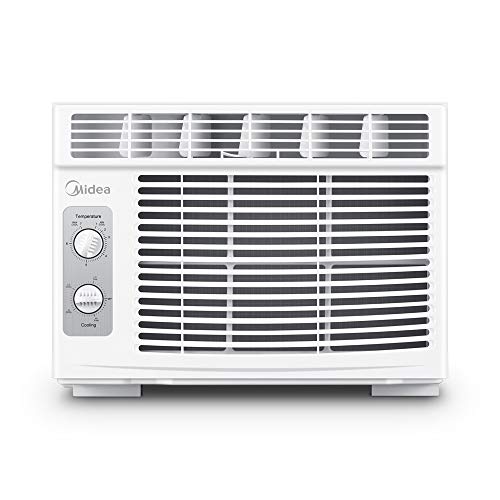
List of the Top 10 Best AC:


Ton to BTU Conversion Guide: Everything You Need to Know
Converting tons of refrigeration to BTU per hour (BTU/hr) is one of the most frequently performed calculations in HVAC work. Whether you're reading a contractor's proposal, comparing mini-split specifications, or verifying that a quoted system matches your calculated load, understanding the relationship between tons and BTU/hr is essential. This guide explains the conversion, why it matters, and how to apply it in real-world equipment selection.
What Is a Ton of Refrigeration?
A "ton of refrigeration" (often simply called a "ton") is a unit of cooling power traditionally defined as the rate of heat transfer needed to melt one short ton (2,000 pounds) of ice in 24 hours. That works out to exactly 12,000 BTU/hr. The unit originated in the early days of mechanical refrigeration when ice was the primary cooling medium, but it remains the standard way HVAC professionals describe the capacity of central air conditioners, heat pumps, and large cooling systems. When a contractor says "you need a 3-ton system," they mean a system with 36,000 BTU/hr of cooling capacity.
What Is a BTU/hr?
A British Thermal Unit per hour (BTU/hr or BTU/h) is a unit of power used primarily in the United States and a few other countries. One BTU is the amount of heat required to raise the temperature of one pound of water by one degree Fahrenheit. When expressed per hour, BTU/hr measures the rate of heat transfer—either heat removed (cooling) or heat added (heating). For example, a 24,000 BTU/hr air conditioner removes 24,000 BTUs of heat from a room every hour. BTU/hr is the preferred unit for load calculations and for specifying smaller equipment like window ACs and mini-splits.
The Conversion Formula
Converting tons to BTU/hr is simple because the relationship is exact by definition:
1 ton = 12,000 BTU/hr
Therefore:
BTU/hr = Tons × 12,000
And to convert the other way:
Tons = BTU/hr ÷ 12,000
Unlike most unit conversions, this one involves no awkward decimal factors—the number 12,000 is exact, which makes mental math easy. Half-ton increments (6,000 BTU/hr) are common, so multiplying by 6,000 for each half-ton is a convenient shortcut.
| Tons | BTU/hr | Common System |
|---|---|---|
| 0.5 | 6,000 | Half-ton mini-split / small window AC |
| 0.75 | 9,000 | 3/4-ton mini-split |
| 1.0 | 12,000 | 1-ton mini-split / small central AC |
| 1.25 | 15,000 | 1.25-ton mini-split / small central AC |
| 1.5 | 18,000 | 1.5-ton central AC / large mini-split |
| 2.0 | 24,000 | 2-ton central AC |
| 2.5 | 30,000 | 2.5-ton central AC |
| 3.0 | 36,000 | 3-ton central AC |
| 3.5 | 42,000 | 3.5-ton central AC |
| 4.0 | 48,000 | 4-ton central AC |
| 5.0 | 60,000 | 5-ton central AC / light commercial |
Why Convert Tons to BTU/hr?
There are several practical reasons to convert between tons and BTU/hr:
- Verifying contractor quotes: HVAC proposals typically state capacity in tons. Converting to BTU/hr lets you compare against your Manual J load calculation, which is usually expressed in BTU/hr.
- Comparing equipment: Central AC units are sold in tons, while mini-splits and window units are sold in BTU/hr. Conversion allows apples-to-apples comparison across categories.
- Understanding specifications: Manufacturer datasheets may list capacity in either unit depending on the region. Conversion ensures you interpret the numbers correctly.
- Manual J integration: Load calculation software outputs results in BTU/hr. Converting to tons tells you which standard equipment sizes are appropriate.
- Commercial and industrial work: Larger chillers and rooftop units are often specified in tons, while engineering calculations may start in BTU/hr.
- Homeowner education: Many homeowners hear "3-ton AC" without realizing it means 36,000 BTU/hr. Converting clarifies what the number actually represents.
Tons vs. BTU/hr: Understanding the Difference
Both units measure the same thing—cooling capacity—so the "difference" is purely one of convention and scale. BTU/hr is a finer-grained unit useful for small systems and precise calculations. Tons is a coarser unit that groups capacity into convenient 12,000 BTU/hr increments, which matches the standard sizes in which central AC equipment is manufactured.
One common source of confusion is mixing up cooling capacity with electrical power. A 3-ton (36,000 BTU/hr) air conditioner does not consume 36,000 watts. In reality, a modern 3-ton unit typically draws around 3,000–3,500 watts of electricity. The tonnage describes how much heat the system moves, not how much electricity it uses. Efficiency ratings like SEER2 and EER2 describe the ratio between the two. A higher SEER2 means more cooling per watt of electricity, which translates to lower operating costs.
How to Convert Tons to BTU/hr Manually
To convert manually, multiply the tonnage by 12,000:
BTU/hr = Tons × 12,000
For example, 2.5 tons × 12,000 = 30,000 BTU/hr. To convert BTU/hr to tons, divide by 12,000: 36,000 BTU/hr ÷ 12,000 = 3 tons. Because the factor is exactly 12,000, these calculations can be done quickly in your head once you're familiar with common equipment sizes. A useful shortcut: each 0.5 ton equals 6,000 BTU/hr, so 2.5 tons is simply 5 × 6,000 = 30,000 BTU/hr.
Common Conversions in HVAC
HVAC professionals work with these conversions daily:
- 1 ton = 12,000 BTU/hr = 3.517 kW (thermal)
- 1.5 tons = 18,000 BTU/hr
- 2 tons = 24,000 BTU/hr
- 2.5 tons = 30,000 BTU/hr
- 3 tons = 36,000 BTU/hr
- 3.5 tons = 42,000 BTU/hr
- 4 tons = 48,000 BTU/hr
- 5 tons = 60,000 BTU/hr
Half-ton increments (6,000 BTU/hr) are also common in mini-split systems, which come in sizes like 9,000, 12,000, 15,000, 18,000, and 24,000 BTU/hr. Converting these to tons gives 0.75, 1.0, 1.25, 1.5, and 2.0 tons respectively.
Practical Examples
Example 1: A contractor recommends a 2-ton central AC. Convert to BTU/hr: 2 × 12,000 = 24,000 BTU/hr. This is appropriate for a roughly 1,200–1,500 sq ft home in a moderate climate.
Example 2: Your Manual J load calculation says the house needs 42,000 BTU/hr of cooling. Convert to tons: 42,000 ÷ 12,000 = 3.5 tons. You would look for a 3.5-ton system.
Example 3: A mini-split is advertised as a "1.5-ton" unit. Convert to BTU/hr: 1.5 × 12,000 = 18,000 BTU/hr. This is a common size for a large bedroom or small living room.
Example 4: A commercial rooftop unit is rated at 5 tons. Convert to BTU/hr: 5 × 12,000 = 60,000 BTU/hr. This is the largest size typically used in residential applications, but common in light commercial buildings.
Conversion Chart for Quick Reference
| Tons | BTU/hr | Tons | BTU/hr |
|---|---|---|---|
| 0.50 | 6,000 | 3.00 | 36,000 |
| 0.75 | 9,000 | 3.50 | 42,000 |
| 1.00 | 12,000 | 4.00 | 48,000 |
| 1.25 | 15,000 | 4.50 | 54,000 |
| 1.50 | 18,000 | 5.00 | 60,000 |
| 2.00 | 24,000 | 6.00 | 72,000 |
| 2.50 | 30,000 | 8.00 | 96,000 |
Using BTU/hr for Equipment Selection
Once you know your required capacity in BTU/hr, selecting equipment becomes straightforward because residential and light commercial AC units are manufactured in standard tonnage sizes: 1.5, 2, 2.5, 3, 3.5, 4, and 5 tons are the most common for central systems. Mini-splits cover the smaller end with 0.75, 1, 1.25, 1.5, and 2-ton units.
The general rule is to select a system whose capacity is closest to your calculated load, without oversizing. Oversizing leads to short cycling, poor humidity control, and higher energy bills. Undersizing means the system runs continuously and may never reach the set temperature on the hottest days. A proper Manual J load calculation, converted to tons, gives you the target number. For example, a load of 34,000 BTU/hr is 2.83 tons, so you would likely choose a 3-ton system rather than a 2.5-ton unit.
Common Mistakes to Avoid
- Confusing tons with electrical power: A 3-ton AC does not consume 3 tons of electricity or 36,000 watts. It typically draws 3,000–3,500 watts.
- Relying on square footage alone: The old "one ton per 500–600 sq ft" rule of thumb is outdated. Climate, insulation, windows, ceiling height, and occupancy matter far more than square footage.
- Rounding to the nearest ton too early: If your load is 30,000 BTU/hr (2.5 tons), rounding down to 2 tons could leave you undersized. Match standard sizes carefully.
- Forgetting altitude and climate adjustments: In very hot or high-altitude climates, equipment may deliver less than its rated capacity, requiring a larger nominal size.
- Ignoring sensible vs. latent capacity: In humid climates, a unit's ability to remove moisture (latent capacity) matters as much as its total tonnage. Oversizing reduces runtime and dehumidification.
Tools and Resources
Our online converter provides instant results with adjustable decimal precision. For professional HVAC work, Manual J software, contractor calculators, and manufacturer selection tools all rely on the same 12,000 BTU/hr per ton relationship. Always double-check critical calculations, especially when sizing equipment for safety or compliance purposes. When in doubt, consult a licensed HVAC professional who can perform a proper load calculation for your specific home.
Frequently Asked Questions
How many BTU/hr is a 2-ton AC?
A 2-ton air conditioner has a cooling capacity of exactly 24,000 BTU/hr (2 × 12,000). This is a common size for medium-sized homes.
How many tons is 36,000 BTU/hr?
36,000 BTU/hr ÷ 12,000 = 3 tons. A 3-ton system is one of the most common sizes for single-family homes in moderate climates.
How do I convert tons to BTU/hr?
Multiply the tonnage by 12,000. For example, 3.5 tons × 12,000 = 42,000 BTU/hr.
Why is it called a "ton" of refrigeration?
The unit originated from the cooling capacity needed to melt one short ton (2,000 pounds) of ice in 24 hours, which equals 12,000 BTU/hr. The name stuck even after mechanical refrigeration replaced ice.
What size AC do I need for a 2,000 sq ft house?
In a moderate climate with average insulation, a 2,000 sq ft home typically needs around 3 to 4 tons (36,000–48,000 BTU/hr). However, a proper Manual J calculation is essential—square footage alone is not a reliable guide.
Is a higher tonnage always better?
No. Oversizing causes short cycling, poor dehumidification, uneven temperatures, and higher energy bills. The goal is to match capacity to the calculated load as closely as possible.
How many tons is a 5-ton AC in BTU/hr?
A 5-ton AC is rated at 60,000 BTU/hr (5 × 12,000). This is typically the largest size used for residential central air conditioning, though larger systems exist for commercial applications.
Can I convert tons to BTU/hr for heating systems?
Yes, the 12,000 BTU/hr per ton relationship applies to any thermal capacity, though in heating contexts, capacity is usually expressed in BTU/hr or kW rather than tons.
Does a 3-ton AC use 3 tons of electricity?
No. Tons measure cooling capacity, not electrical power. A 3-ton AC typically consumes 3,000–3,500 watts of electricity, depending on its efficiency rating.
Quick Reference: Ton to BTU/hr Conversion Factors
- 1 ton = 12,000 BTU/hr
- 1 BTU/hr = 0.00008333 tons
- 1 ton = 3.517 kW (thermal)
- Standard residential sizes: 1.5, 2, 2.5, 3, 3.5, 4, 5 tons
- Half-ton shortcut: 0.5 ton = 6,000 BTU/hr
Final Thoughts
Converting tons to BTU/hr is a simple multiplication by 12,000, but understanding why the conversion matters is what helps you size equipment correctly and avoid costly mistakes. Whether you're comparing quotes, reading a datasheet, or planning a new installation, the ton-to-BTU/hr relationship is one of the most useful tools in the HVAC toolbox. Use our converter above for instant results, and refer back to this guide for formulas, charts, and practical advice.